


Camouflaged amidst native nature, invasive alien species (insects, plants, animals, etc.) are one of the leading causes of the reduction of native flora and fauna in Chile. Their advance is such that today they are almost impossible to eliminate. Beavers, pines, minks, salmon, and even irresponsibly owned pets like dogs and cats are among them.
his report was one of nine shortlisted nationwide for the 2021 University Excellence Journalism Award from Alberto Hurtado University, serving as recognition that invasive alien species are a serious problem in the country. I am deeply grateful for the support and time of everyone involved. This article was originally written in Spanish and translated into English with the help of AI.
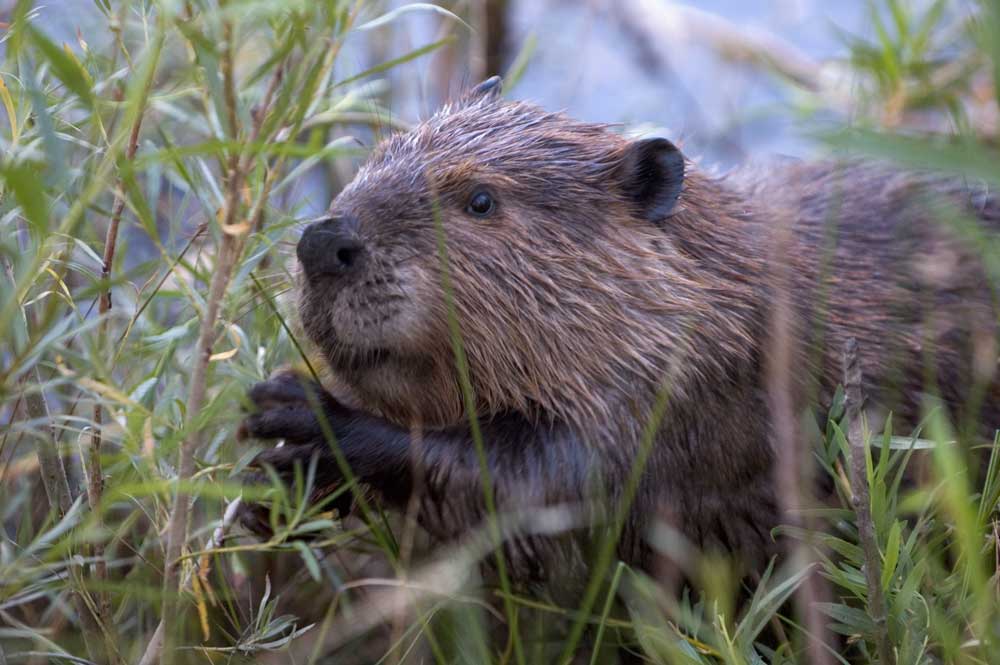
Claudio Flores sat on one of the thousands of lengas—a tree also known as the Tierra del Fuego beech—lying dead along the riverbank. He had traveled for hours to hunt down the culprit behind the destruction of over 20,000 hectares of Fuegian forest. As he watched the dam built by the animal he was preparing to kill, he noticed movement in the water: a beaver. "It was beautiful," he recalls. Beautiful and huge—likely weighing over 20 kilos. He aimed at the rodent's head peeking out of the water, and a burst of 15 pellets fired from his air rifle. The carcass drifted away.
While it might seem cruel, Claudio believes an effective shot is far more merciful than the traps implemented by the Agricultural and Livestock Service (SAG). Accustomed to hunting pest animals like beavers and rabbits, Flores feels that his work helps the environment, despite occasional criticism from animal rights activists. "They are contradictory," he argues, "because how much wildlife dies when we don't control these species?" For this reason, experts like Fabián Jaksic—a Chilean biologist and National Science Prize winner—value the work of hunters like Claudio. "The beaver is not only interfering with the fauna of Tierra del Fuego; it is wiping out lenga forests and turning them into swamps full of dead trees," the expert explains.
Claudio is so convinced of the service he provides that he even records videos of his hunts and uploads them to his YouTube channel, Patagonia Airguns Chile, which has over 170 videos and more than 33,000 subscribers. The videos gathering the most positive comments (mostly congratulations) and likes (over 3,000) are those where Claudio showcases his hunting skills.
However, the efforts of the hunter from Punta Aren are in vain. There is no certainty regarding the exact number of beavers in Chile, but the GEF Beavers Initiative and the Ministry of the Environment (MMA), through its National Species Inventory, estimate that there could be between 65,000 and 250,000 of them, mainly on Isla Grande in Tierra del Fuego. Although the SAG has developed pilot control projects, and there is an agreement between Chile and Argentina to exterminate the beaver, experts say that the best outcome that can be achieved is to halt their population growth and prevent their northward expansion. “We have to consider Tierra del Fuego a lost cause and defend the Magellanic mainland,” says Fabián, referring to the beaver’s ability to destroy entire ecosystems. “We have very few successes in eradicating invasive alien species in Chile, and those have been on small islands: Santa Clara Island, the Juan Fernández Archipelago, and Humboldt Penguin Island. Tierra del Fuego is a giant island. There’s no chance of eliminating the beavers from there.”
To this is added the beaver's massive economic impact: $60 million USD, partly stemming from losses in livestock production—since beaver dams flood grazing lands—and forest loss, as the rodents fell native trees to build dams. To date, their damage spans 27,000 hectares, equivalent to one-third of the city of Santiago's surface area.
To make matters worse, the beaver is not alone; it is part of a catalog of 1,119 naturalized/feral alien species in Chile—non-native species that in some cases become invasive, causing damage to biodiversity through predation and resource competition, as well as economic harm. Paradoxically, some of these invaders are protected by law.
What Are Invasive Alien Species?

There is a consensus among scientists that invasive alien species (IAS) are one of the main causes of biodiversity loss—the variety of living organisms and ecosystems—on the planet. Alien species are organisms (plants, animals, insects, etc.) that arrive in a habitat outside their natural range. The vast majority of them fail to establish themselves or survive only in a very limited area of the place they “colonize”; at this stage, they are considered merely alien, naturalized, or feral species. Not all of them are harmful. Some are even used as a source of sustenance by some Chileans (rosehip or quince, for example). However, when they are labeled “invasive”—that is, when they are able to successfully establish themselves and reproduce in that new ecosystem to the detriment of native species—they become a threat to biodiversity. They pose a threat because they prey on and compete for resources (water, sunlight, food, territory, etc.) with native organisms, whose populations are usually reduced as a result of these invasions.
Salmon is one of these invasive species, and it can be both beneficial and harmful. Commercially, exports exceeded $5 billion in 2019, making it the second-most-exported product, according to Salmón Chile. On the other hand, its introduction into waterways has led to a decline in native fish and crustaceans due to competition for resources, predation, and the spread of disease. “They wiped out all the freshwater biodiversity on our side of the continent. And we didn’t even know what kinds of species lived there,” explains Eduardo Raffo, regional coordinator for Wildlife at the SAG in Los Ríos.
Despite the damage they cause, some salmon species—there are 14 in our country, according to the National Species Inventory—are protected by closed seasons. In other words, fishing for them is prohibited at certain times to ensure their reproduction. The same was true of the red deer, which was also protected until January 2015, despite being an invasive alien species. The reason, in both cases, is the same: economic. In addition to salmon fishing, there is also the hunting of this mammal, which arrived in Chile via two routes: from Germany and Argentina. In the first case, it was an import intended for hunting reserves; in the second, the animals crossed the Andes on their own. It is not known with certainty how many exotic deer there are in Chile today, but in 2007, the INE’s Agricultural Census recorded 5,827 head in breeding facilities. The price per kilo of this animal’s meat can range from $6,000 to $22,000—the average weight of a deer ready for slaughter is 100 kilos—according to a 2009 report by the Ministry of Agriculture’s Foundation for Agricultural Innovation.
The beaver is also an invasive species. Native to North America, it has been found in southern Chile since the 1940s, when an attempt was made to establish a fur industry in the Argentine part of Tierra del Fuego—an initiative that did not succeed. Once released, these rodents—which initially numbered no more than 20—multiplied and spread until they reached our country.
But the problem with North American species in Chile doesn’t end there. The mink is another invasive alien species—considered one of the most harmful—that also arrived in Chile as a result of the 20th-century fur industry. Found from the Araucanía region southward, this mammal is known for its excellent swimming ability and voracious appetite: in a single month, it can consume nearly 1,000 fish and 500 crabs. Furthermore, its varied diet is not limited to marine animals; it also includes birds, insects, and mammals.
For small farmers, a mink attack can be devastating. “It can kill as many as 130 chickens,” explains Eduardo Raffo. He estimates that the damage caused by these attacks can amount to a small farmer’s entire year’s income. Along these same lines, the Ministry of the Environment and other international organizations estimate that more than $9 million is lost each year—equivalent to the annual cost of 155 medical degrees at the University of Chile (seven years of study; 2021 tuition costs) or 18 electric buses—as a result of attacks on both livestock and wildlife.
Veterinarian Belén Bustamante worked on mink control and trapping in Chiloé during 2019 and attests to the species’ voracious appetite. “Their diet is quite varied, and they tend to attack the easiest prey, which here in northern Chiloé are chickens,” she says. She explains that one way to recognize an attack by this small mammal on poultry is the absence of the head and/or neck on the chickens. In addition, they often return to the chicken coops for several nights in a row until they have wiped out the entire flock. According to him, it’s common for farmers to decide to switch to a different line of work because they’ve lost all their birds following an attack by this mammal. Added to this are attacks by mink on pets, newborn calves, ground-nesting birds, black-necked swans, and even pudús. To top it off: they are highly mobile—they can swim from the mainland to Chiloé and back—and ferocious. Even in captivity, it is difficult to euthanize them because they attack anyone who approaches them, according to Belén.
It is not known for certain how many minks there are in Chile, but their population has grown over the past few decades to the point of displacing native species such as the huillín, a native otter with which the mink is often confused.
The persistence of invasive alien species over the years has another effect: they become so intermingled with native nature that we can no longer distinguish them as “alien” species. The oriental plantain, dogs, cats, pines, and eucalyptus trees are examples of this. Aníbal Pauchard, director of the Biological Invasions Laboratory (LIB), warns that as these species spread, the identity of natural ecosystems is lost, leading in the long term to what is known as “biocultural homogenization.” “It’s like McDonaldization. Wherever you go, there’s a McDonald’s. This would be something similar, but in nature,” he explains. In other words: as a result of these invasions, what makes Chilean nature unique is gradually being lost.
Pauchard and other scientists even go so far as to compare invasive alien species to the recent, explosive spread of the SARS-CoV-2 virus. As they explain in an article in the journal Trends in Ecology and Evolution, “This viral outbreak exhibits characteristics typical of an invasive species: sudden emergence, rapid proliferation and spread, adaptation to new environments (or hosts), large-scale geographic dispersal through human transportation networks, and significant repercussions—in this case, on human health and well-being.”
The introduction of species from one territory to another is nothing new. On the contrary, it has been a natural process for millions of years, and humans have been part of it—both intentionally and accidentally. The rise of trade and globalization from 1500 onward exponentially accelerated this transformation, which in nature used to take generations. Even in the accounts of Christopher Columbus, there is mention of the transport of crops and livestock to the Americas—not to mention the rats and other pests that arrived on our continent as stowaways on European ships. Historical documents such as “Juan Fernández: The True Story of Robinson Crusoe” by Benjamín Vicuña Mackenna, recount that Alexander Selkirk, a Scottish pirate abandoned after arguing with his ship’s captain in 1703, survived for four years in the Juan Fernández Archipelago thanks, in part, to the goats that had been introduced there earlier and that today pose a threat to the flora due to their predatory nature.
More than 500 years later, maritime transport remains a major means of spreading IAS. In addition to those intentionally transported in ship holds, various marine species—primarily mollusks and algae—are carried as “stowaways,” as they attach themselves to the submerged parts of ships or to ballast water—seawater taken on board to provide stability—and are thus able to travel thousands and thousands of miles. Currently, there are international efforts to prevent this type of invasion, such as the “International Convention for the Control and Management of Ballast Water and Sediments,” which requires ships to manage their ballast water by replacing it on the high seas to prevent the introduction of exotic organisms into ports of destination.
Chilean species have also been affected by these invasions. The topographic characteristics of the territory, which is isolated from the rest of the continent, have allowed for the development of flora and fauna with a high level of endemism—that is, species that can only be found in our country. Osvaldo Vidal, an associate professor at the Botany Laboratory of the University of Magallanes, notes that Chile is practically a “biogeographic island.” “We have an ocean on one side, a desert in the north, the Andes mountain range on the other side, and glaciers in the south,” he explains. Despite this biological richness, the limited distribution—and sometimes small populations—of certain plants and animals mean that any change in their environment can seriously affect their numbers. Being endemic does not mean a species is more vulnerable to invasions, but it does make its loss all the more significant. “It is much more regrettable for a place with a high level of endemism to be invaded than for a place with a low level,” explains Vidal. And this is the case in Chile: of the 31,000 recorded species, 25% are endemic. What’s more, approximately 40% of the country is considered one of the 35 hotspots or biodiversity hotspots found around the world. The importance of the hotspots It is enormous: these are areas that contain at least 0.5% of all the world’s vascular plants—those with roots, stems, and leaves—which in practice amounts to 1,500 species or more.
Uninvited Pet
José (18)—not his real name—had always raised sheep, but when he arrived at his grandparents’ house in Mulchén, in the Biobío Region, in 2020, he had just acquired his first five. That’s why he was so furious when he found the mauled carcass of one of them. “They don’t even eat them. They kill them and just walk away,” he explains, referring to the culprits: two stray dogs that had already attacked other sheep in the area.
—Did you report the attack?
—Dog attacks aren't reported, since no one will come to catch the dogs. No one helps.
On the very day of the attack, last January, José killed a dog for the first time to “seek justice” for his dead sheep. However, what José did was illegal; that is why he is asking to remain anonymous in order to give his testimony. The Chilean Penal Code establishes prison terms of up to three years and a fine of up to 1.5 million pesos for those who “cause injuries that seriously impair the physical integrity of an animal or result in its death.” That is why there is a code of silence among ranchers regarding the killing of dogs in response to damage caused by attacks and the authorities’ failure to control dog populations. It is an open secret that some ranchers kill dogs that enter their property. Some hunters claim that ranchers pay for every dog killed in Tierra del Fuego. For ranchers, the decision seems logical: it’s either kill a dog or lose their livelihood.

According to estimates from the Undersecretariat of Regional Development, there were 3.6 million dogs in 2019, of which nearly 700,000 were ownerless and/or strays. As of February 2021, only 1.2 million of these dogs were properly registered in the National Pet Registry, even though Law 21,020—also known as the Responsible Pet Ownership Law or the Cholito Law—requires owners to register their pets. As a result, fewer than half of the dogs in our country have a microchip implanted, and therefore it is not known with certainty who the owner is who should be held responsible for any damage they might cause.
At the same time, the number of dog attacks is underreported. According to data collected by the Parliamentary Technical Advisory Office for a bill designating dogs as an invasive alien species—Bulletin No. 12,271-01—regarding reports of dog attacks on livestock submitted to the SAG, between 2012 and 2018, dogs were reportedly responsible for the deaths of 6,689 head of livestock. Far exceeding this figure, the 2017 Sheep Livestock Survey—which collects data in the field rather than relying on reports—attributes the deaths of more than 23,000 head to dogs—the survey only counted data from flocks of more than 60 head, so this figure may be higher—making dogs the country’s leading predator of sheep. By comparison, pumas account for only about 12% (just over 8,000 sheep) of predator attacks on sheep.
Cristian Fuentealba, manager of the Baker Farmers’ Cooperative, located in the Cochrane commune in the Aysén Region, agrees with this assessment: dog attacks far outnumber attacks by wild animals, and reporting them accomplishes nothing. For the cooperative—composed of 42 families who depend largely on the wool trade for their livelihood (an industry that accounts for about 40% of the group’s sales, according to Cristian)—dog attacks are a severe blow to their economic stability. Sometimes the impact is so great that some farmers simply decide to switch to a different line of work.
Perhaps the most emblematic case is that of Belisario Paredes (43), a sheep rancher in the area who was the victim of two major attacks. The first occurred in 2014, when he lost 73 sheep over the course of two months. Belisario believes the dogs belonged to some neighbors, and for that reason, he says, he filed a report with the Carabineros. While the investigation was underway, Paredes collected photographic evidence of the attacks, which were becoming increasingly frequent, and even managed to identify the perpetrators: a pack of six dogs. However, the official investigation made no progress, and Belisario continued to lose sheep. By the time the matter finally reached the courts, he says, his complaint was dismissed due to lack of evidence. Frustrated, he admits that it would have been easier to kill the dogs than to go through the entire legal process.
The second attack occurred in 2020 and was even more brutal: he lost 130 sheep in just one week. On the bloodiest night—June 24—he lost 70. Those that survived were seriously injured or maimed; Belisario had to slit their throats and burn them. Emotionally, he still hasn’t recovered from that, as he admits. “I don’t understand what the dog’s motive is,” he says. “Pumas and foxes kill one or two to eat, and that’s understandable. It’s acceptable and within the expected loss rate. But dogs are different. Dogs attack and wipe you out in no time.” Currently, he has only eight sheep left, which he keeps in a fenced-in pen measuring 10 square meters. They don’t leave there without supervision. “For their protection,” he explains.
After that attack, Belisario gave up sheep farming and now works for the Cochrane Municipality. He still can’t help but regret his loss, though: each sheep was worth approximately 60,000 pesos, so buying 70 sheep would cost about 4.2 million pesos. However, since they were wool-producing sheep, Belisario estimates that, had he kept the 130 sheep, he would have earned 25 million pesos from shearing over three years. That’s income he would have liked to have had to pay for his son’s college education.
Dogs are a serious problem not only for livestock farmers but also for native wildlife. According to a study by the National Forestry Corporation (Conaf), between 2007 and 2012, 128 animals—including sea lions, guanacos, penguins, huemules, shearwaters, and others—are believed to have died as a result of attacks by dogs and cats. According to this same report, dogs were responsible for 75% of those deaths. However, just as with livestock losses, this figure does not reflect reality. According to CONAF, only one in five attacks on wildlife is reported. Other studies also point to dogs as the main aggressors: the Ministry of the Environment reports that most pudú that arrive at rehabilitation centers are injured from dog attacks. Sixty-eight percent of them do not survive. Another indirect victim of dogs is the condor. In an effort to get rid of dogs that attack their livestock, ranchers poison carrion that these birds later consume. In February of this year, 35 condors were found dead from this cause in Tarija, Bolivia. A similar incident occurred in the town of Los Andes in 2013.
Hunting isn’t the only problem. Like other invasive alien species, dogs can transmit diseases to wildlife, including scabies, distemper, and rabies, among others. Miguel Diaz, a veterinarian and member of CONAF’s Department of Biological Diversity Conservation, points out that there are insufficient tools to control the dog population within state-protected areas (national parks, marine reserves, etc.). Current control measures can be summarized as education and responsible pet ownership programs for nearby communities, bans on bringing pets into these areas, and the capture and removal of dogs. “I can walk around with a stick to scare the dogs away so they don’t attack the huemules, but that’s an inadequate solution to a massive problem,” he explains. He argues that domestic dogs are in a privileged position, above native wildlife. For this very reason, Miguel advocates for legislation to approve euthanasia as a control method, as is the case in Spain, the United States, and Australia. Organizations such as the Veterinary Medical Association, the Faculty of Veterinary and Animal Sciences at the University of Chile, the Association of Wildlife Veterinarians, and other veterinary organizations support this type of measure.
Although there is a consensus in the field of wildlife conservation regarding the harm caused by irresponsibly kept pets, such as dogs, it is also recognized that it is difficult to move toward legislation that would allow for their hunting or euthanasia, due to the controversy surrounding the issue. On January 31, 2015, Decree 65 introduced several amendments to the Hunting Law. One of these amendments classified “packs of wild or feral dogs” as harmful animals, thereby permitting their hunting throughout the country. However, following various protests and lawsuits filed by animal rights groups, the decree was repealed just 18 days after its enactment.
Francisca Astorga, a member of the Association of Wildlife Veterinarians (Amevefas), also criticizes the privileged position dogs enjoy compared to other wildlife. She says that, even though regular controls are carried out to reduce the number of invasive species, dogs get “good press.” “People don’t protest against killing beavers, but they do protest against killing dogs.” That’s why her stance is unequivocal: “When you don’t control them (dogs), what you’re doing is indirectly killing pudú,” she says by way of example, since dogs are one of the factors responsible for the decline in pudú populations in Chile.
In addition to being a highly controversial issue among the public, this factor is compounded by a series of inaccuracies during the few opportunities that have arisen to legislate on the matter. Two bills—Bulletin 12.411-11 and 12.271-01—that would allow for the lethal control of dogs in Chile have been pending in the National Congress for at least two years. Both bills, which differ in terms of who would be authorized to carry out this process, share a common flaw: they aim to control feral dogs, defined as those that have lost their domestic status and, as a result, do not depend on humans for their survival. According to ecologists and veterinarians, the problem is that feral dogs are virtually nonexistent in Chile: the damage caused to both wildlife and livestock stems from dogs with owners.
While acknowledging the damage caused by these animals, Mónica Madariaga (30), a volunteer attorney with the Lawyers for Animals Foundation (APLA), advocates against the use of lethal control methods on dogs because they, like people and other animals, are sentient beings capable of feeling pain and pleasure. Furthermore, she emphasizes that we humans are solely responsible for the condition and behavior of dogs. Her opinion extends to other invasive alien species as well. “We don’t want to take responsibility for our actions, and we want to punish animals that are not to blame for being introduced. Dogs are not to blame for being abandoned or for wandering off unsupervised,” she explains, while advocating for greater oversight and stricter measures against those who do not properly care for their pets.
However, not all animal rights activists are so radical. Cristian Apiolaza, legal director of Vegetarianos Hoy—an NGO that is part of the #NoSonMuebles movement in partnership with APLA and other organizations—while not in favor of killing animals, acknowledges that in certain cases it will be unavoidable to use euthanasia to protect nature. “I believe that the philosophical argument (that animals feel the same way as humans) falls short when it comes to this type of issue, because it offers no solution to the problem. It’s a rather outdated argument, dating back to when the animal rights movement made demands but failed to address the underlying issue, which is the preservation of nature.”
State efforts to control it
The Chilean government has several decades of experience in controlling invasive species. As early as 1953, President Carlos Ibáñez del Campo expressed his concern to Congress about the economic damage caused by rabbits to farmers in the far south. Moreover, by that time, the Tierra del Fuego Exploration Society had already invested—without much success—18 million pesos in the extermination of the rodent (which would be equivalent to more than 800 trillion pesos, according to the National Institute of Statistics’ CPI calculator). In fact, as early as 1947, there were bills that granted greater powers to the Ministry of Agriculture for pest control, such as the Plant Health Police Act, which was passed in May of that year.
These efforts have not been in vain. Today, Chile is internationally recognized as a country free of pests (such as the fruit fly and swine fever, among others). However, since the last century, these efforts have been driven by an exclusively economic perspective, seeking to protect the productive sectors—primarily agriculture and forestry—of the economy. To date, the preservation of biodiversity has not been a cause championed by any government and, consequently, has not been a priority for the institutions with the authority to implement such controls: the Agricultural and Livestock Service and the National Forestry Corporation, both under the Ministry of Agriculture; and the National Fisheries and Aquaculture Service and the Undersecretariat of Fisheries and Aquaculture, both under the Ministry of Economy.
Lilian Ibáñez, head of the Pest Risk Analysis Section in the Agricultural and Forestry Protection Division of the SAG, confirms this position. “When we have to determine whether or not a pest is under control, while we do measure its impact on nature, we prioritize those pests that have a very significant or severe impact on productive sectors.”
The Ministry of the Environment, the agency responsible for ensuring the protection of nature—even above economic interests—still lacks the legal tools to directly control and/or eradicate invasive alien species (IAS). In fact, there is no legal framework that allows the government to address invasive alien species in a coordinated and systematic manner. It is telling that the tools used to date for controlling IAS were not created for that purpose, with the exception of the national strategies and plans developed by environmental authorities, whose actions are limited by the current legal framework. An example of this is the current National Biodiversity Strategy (2017–2030), which addresses the control of IAS but acknowledges that without an implementing body—in this case, a Biodiversity and Protected Areas Service (more on this later)—it would be difficult to meet the established goals.
Some of the tools used today to control invasive alien species (IAS) include the Hunting Law and its accompanying manual—which does not even mention the term “invasive”—which regulate the hunting, capture, breeding, and conservation of wildlife, and which recognize and authorize the control of only 20 species nationwide, classified as harmful species. A harmful species is one that “due to its characteristics or habits, whether natural or acquired, is causing serious harm to any human activity carried out in accordance with the law, or is causing significant imbalances in the ecosystems in which it lives.” In addition, Articles 37 and 70 of Law 19.300 on General Environmental Principles allow for the classification and management of species, and for the proposal of recovery and conservation plans and policies, respectively. Finally, the authorities of each institution involved in this matter to take action regarding pests, weeds, protected areas, or the entry of species into the country are considered.
However, most of these powers (with the exception of Law 19.300) were not intended for the control of invasive alien species or for the conservation of biodiversity. For example: the phytosanitary protection policies implemented by the SAG or the controls carried out by Customs at the country’s points of entry. There are likely other tools available, but the key point is that none of them addresses the main issue: in most cases in our country, IAS control is carried out to protect economic production rather than nature.
It is significant that in 1995 Chile ratified the Convention on Biological Diversity, an international treaty aimed at conserving global biodiversity that had entered into force in 1994. It was only then that the problem began to be viewed from an environmental perspective. While it is true that some programs aimed at controlling invasive alien species existed prior to this date—such as CONAF’s “Red Deer Management and Adaptation Plan” in 1975—these were implemented in very limited areas and lacked the continuity necessary to have a significant impact. “We have decades of experience with species that are agricultural pests, but approaching control from the perspective of biodiversity conservation is a much more recent development,” explains Charif Tala, head of the Department of Species Conservation at the Ministry of the Environment.
Also in 1994, the National Environmental Commission (Conama) was created, which designed the first national strategies and plans to address this issue. However, this did not resolve the underlying issue: there is no institution with the necessary authority to address invasive species. Moreover, today the ability of government organizations to carry out control measures in priority areas is hampered by a complex system for managing protected areas (see table below).
“The SAG has jurisdiction outside urban areas but not within national parks; CONAF has jurisdiction over the parks. But something strange happens: if CONAF wants to conduct EEI hunting, it still has to ask the SAG for permission. We can’t enter national parks and take action without permission. The issue can get even more complicated because there are nature sanctuaries owned by the Ministry of National Assets and administered by CONAF. So in those cases, you have to request authorization from both agencies, and in the end, you end up with a huge mess,” explains Eduardo Raffo of SAG. “That’s why it’s important to get along with our colleagues,” he concludes, trying to take the administrative tangle in stride.
The Operational Committee for the Prevention, Control, and Eradication of Invasive Alien Species (Cocei) was established in 2005, bringing together thirteen institutions that, at first glance, have little in common but that, in one way or another, have the authority to act on this issue. These include the Ministry of the Environment (which acts as coordinator), SAG, CONAF, the National Fisheries and Aquaculture Service (Sernapesca), and the Undersecretariat of Fisheries and Aquaculture (Subpesca)—the first five of which are the most active, according to members of the commission—as well as the General Directorate of Maritime Territory and Merchant Marine (Directemar), the Chilean National Police (Carabineros de Chile), the Ministry of Foreign Affairs, the National Museum of Natural History, the Office of Agricultural Studies and Policies (Odepa), the PDI’s Investigative Brigade for Crimes Against Public Health and the Environment (Bidema), the National Customs Service, and the Undersecretariat of the Armed Forces.
The committee, officially recognized in 2013 through an exempt resolution, has been the only state agency focused exclusively on the control of invasive alien species. However, despite its name, Cocei has little that is “operational” about it, since its work is limited to advising and making recommendations to the authorities regarding the management of invasive alien species: it does not carry out fieldwork. To date, its work has consisted mainly of shedding light on the impact of IIS in our country through reports and advisory services. Examples of this include the first list of Naturalized/Feral Exotic Species and the report “Economic Assessment of the Impact of Seven Invasive Alien Species on Productive Sectors and Biodiversity in Chile,” both of which have already been mentioned in this article.
“The fact is that COCEI is not a state administrative body, but rather a coordinating committee for various public services. Therefore, COCEI’s powers and authority are limited to those mentioned in the resolution, and it is an advisory body rather than one responsible for implementing invasive species control programs,” admits Charif Tala, who is also a member of COCEI. It is significant that today, in 2021, the image of Cocei remains the same as that summarized by the United Nations Development Program (UNDP) in a report from just over a decade ago: a “forum for information exchange” and “a coordinating body.”
The committee, which met between two and six times a year from 2013 to 2020 according to its minutes, has participated in the creation of the Operational Committee for Mink Control and the GEF Beavers project—both of which operate separately from Cocei and do carry out fieldwork— in public awareness and communication campaigns regarding invasive alien species (in 2020 alone, they shared 12 posts, five of which were on social media and the rest via digital media), in intersectoral roundtables on responsible pet ownership, has promoted coordination among various public services regarding biological invasions, and other tasks.
However, the minutes themselves show that COCEI’s work has been slow. The committee has been working on a National Action Plan for the Management of Invasive Alien Species since 2013 (it currently has a preliminary draft, according to its members), without which it cannot fulfill its most urgent mandate: to create the National Integrated Program for the Prevention, Control, and Eradication of Invasive Alien Species. In addition, work has been underway since 2016 on a list of prioritized invasive alien species. By April 2018, the lack of a “clear and cross-cutting definition to determine the invasive nature of a species” had been acknowledged, as stated in its records. “Starting in 2017, we began reviewing what institutions were doing to control IAS, and that’s when we discovered the regulatory gap in the country and the ambiguous language used by some institutions (to define IAS). Some didn’t even consider them or know they existed,” explains Miguel Díaz, who has been a member of this committee for several years. He adds that it was necessary to establish the concept within the various institutions with authority over IAS control and to launch a training program. Regarding the action plan, he notes that they were indeed working on it after addressing the previous issue, but that from 2019 onward “Cocei entered an inexplicable period of inactivity, which I still cannot quite understand (between 2019 and 2020, they met only four times), because clearly the issue of EEI control in Chile requires action, investment, and a much greater commitment from institutions than they are currently demonstrating—which is basically limited to outreach, reporting, and monitoring in some cases.”
Charif notes that they are currently continuing to work on the action plan to align it with the current National Biodiversity Strategy 2017–2030. Once completed, this document will be one of the pillars of the national program for the management of invasive alien species.
The Biodiversity and Protected Areas Service
After five years of debate—eight, if one takes into account its first version, which was withdrawn in 2014—on July 24, 2019, the Senate approved the bill creating the Biodiversity and Protected Areas Service (SBAP)—Bulletin 9404-12—to continue its passage through the Chamber of Deputies. If approved by the Chamber of Deputies as well, the initiative—which was proposed following the creation of the Ministry of the Environment in 2010—would become the enforcement arm of the environmental agency that, among other functions, would be responsible for regulating IAS throughout Chile.
“This is a project that, for the first time, will create a public agency to implement on the ground the policies and regulations that have been enacted regarding biodiversity,” explains Lorna Puschel, former head of the Department of Environmental Legislation at the Ministry of the Environment during Michelle Bachelet’s second administration. As such, Puschel participated in both the drafting of the document and the subsequent discussions, and she is excited that the bill will, for the first time, define in a legal text what constitutes an invasive alien species and bring order to the administrative chaos that currently surrounds them. “The regulation will not only organize the categories (of protected areas), integrating marine and terrestrial ecosystems under a single framework, but it will also consolidate responsibilities, taking a comprehensive view of the system. And the other aspect—perhaps less well known—has to do with the tools being developed for conservation outside protected areas,” she notes.
If approved, the SBAP would have several tools at its disposal for managing invasive alien species. In addition to directly carrying out the control and/or eradication of invasive species within protected areas without requiring prior authorization from another public agency—as is currently the case—it could also do so outside these areas in coordination with the SAG and Subpesca. At the same time, together with these two institutions, it could authorize or prohibit the entry of exotic species into the country, among other powers.
Although the SBAP is a bill that aims to fill a gap in biodiversity protection across the country, it has been under consideration for nearly 11 years, and there is still no certainty as to when it might be approved (or rejected). “I don’t think we’ll have to wait another 11 years,” says Sharif Tala. “It’s absurd that a bill of this nature is taking so long, given that it’s a mandate under the framework law. But that discussion has been delayed because, if the SBAP were created, it would have the authority to intervene in certain sectors of production, and there’s a part of the government itself that doesn’t find that very appropriate.”
In general, there are four reasons that help explain the delay in processing the bill. The first points to technical errors: the initial version—Bulletin 7487-12—lacked the political support to even bring it up for a vote, since, in the opinion of various figures in the conservation community, it was simply a poor bill. “We had some important observations; there were shortcomings in that bill, both in form and substance. However, there were also many interesting and innovative elements that we corrected and added to the second bill,” explains Alejandra Figueroa, former head of the Ministry of the Environment’s (MMA) Division of Natural Resources and Biodiversity from 2014 to 2018, who led the legislative process for the second bill. That first version of the SBAP—which lacked, among other things, provisions protecting wetlands—was submitted in March 2011, during Sebastián Piñera’s first administration, because Law 20.417 (2010) required the Executive Branch to submit a bill to Congress within one year to establish a biodiversity service.
The second factor stems from the consultation required by indigenous communities, which took place between 2016 and 2017 and involved nearly 11,000 people in more than 600 meetings. However, during the process, criticism was voiced regarding the consultation process itself, as it was conducted after the bill had been submitted to Congress rather than before.
What some euphemistically call a “lack of consistent political drive” constitutes a third factor. “The executive branch (under both the Piñera and Bachelet administrations) has shown a genuine interest in moving the bill forward. However, (the SBAP) is not a project that was particularly important to either president, to be honest. And, at least in the previous administration (Bachelet), it wasn’t a top priority for the ministers either. I think that’s also part of the reason why it has taken so long,” adds Lorna.
Finally, opposition to the initiative from some of CONAF’s unions has also delayed progress on the SBAP. Alejandra Figueroa believes the project became “stalled” when the unions began to oppose the proposal because the SBAP would replace CONAF’s work in protected areas. At the same time, as evidenced by various emails that representatives of forestry workers have sent to members of Congress, their main objection relates to labor issues.
All in all, one could even identify a fifth factor, namely the size of the project: to date, it includes more than 100 articles and contains more than 1,400 provisions. The first report from the Committee on the Environment and National Assets alone was more than 700 pages long, and the four subsequent reports total more than 600 pages.
New Constitution and Biodiversity Conservation
It is difficult to predict how the Constitutional Convention and the new Constitution will affect the control of invasive alien species. What is certain is that environmental conservation is an issue that is part of the discussion. In the “Constitutional Process Open to Citizens” survey (2016), 34.02% of the 90,000 respondents expressed support for including respect for and conservation of nature in the Constitution; and several of the elected constitutional delegates also support this. In fact, 64 constitutional delegates have signed in support of the #NoSonMuebles initiative—Mónica Madariaga of APLA and Cristian Apiolaza of Vegetarianos Hoy were part of the team that drafted the proposal—which seeks to include animals in the new document. Regardless of the values and principles that shape it—whether it’s the recognition of animal rights or environmental protection—it is a fact that these are not always upheld in reality. Without looking too far afield, the current Constitution guarantees that all people have the right to live in a healthy environment, yet nine Chilean cities top the list of the most polluted in South America, according to the report World Air Quality Report (2020) by IQAir in collaboration with Greenpeace and other organizations.
Nor can this issue continue to be put off. Rising temperatures caused by climate change—which will only increase if no action is taken, as the Intergovernmental Panel on Climate Change (IPCC) indicated just a few weeks ago—would favor the spread of invasive species at the expense of native ones, according to the Ministry of Science’s report “Impacts of Climate Change on Biodiversity and Ecosystem Functions in Chile.” Some of the species that would benefit include the mink, the pine tree, and the African clawed frog, among others.
By the time this article was completed, the SBAP bill had been pending for two months in its second constitutional review in the Chamber of Deputies’ Committee on Agriculture, Forestry, and Rural Development.
Situation in Juan Fernández
Known as the “Galápagos” of botany, the Juan Fernández Archipelago is currently facing a serious threat to its biodiversity. Its flora and fauna are unique: 63.4% of its species are endemic, and 75% of its flora is at serious risk of extinction, primarily due to the spread of invasive alien species.
The botanist Gualterio Looser sounded an early warning about this danger in a 1927 article published in the Chilean Journal of Natural History, in which he lamented the presence of the blackberry, a weed that was already causing damage on the continent.
A hundred years later, the projections are catastrophic. “I believe that in 30 or 40 years, there will be no forest left on Juan Fernández,” says Rodrigo Vargas, who holds a Ph.D. in Forestry and has conducted various studies on the conservation status of Robinson Crusoe. Since 2003, Vargas has been warning about the devastating impact of these species—especially the murta, maqui, and blackberry—which tend to grow at the base of native plants, “choking them out” by depriving them of water and light. Added to this is the threat posed by other exotic animal and plant species inhabiting the archipelago: rats, pines, eucalyptus trees, domestic cats, etc.
As Rodrigo adds, despite the bleak outlook, greater efforts should still be made to conserve the biodiversity of Juan Fernández. “It’s such a unique place—no matter how difficult the task may be, we have to fight for it anyway.”
Leave a Reply